Six Fears in Nature Connection — and How to Move Through Them
Six fears in Nature Connection that quietly pull you out of the moment — how to spot them on the trail, and how to move through fear instead of with it.
Imagine it:
You pull up to a trailhead to a beautiful waterfall. Weather conditions are favorable, the drive was easy, and you have all the right gear. The environment is ideal for connecting with the Natural World.
You pass the trailhead sign and open up to the landscape with optimism. A few deep breaths and some simple stretches tell your body you’re ready to relax, and open up to Nature’s intelligence.
Then, something happens.
As you walk, it’s as if the more connected you feel, the more thoughts creep in. Something at work. An email you’re expecting. An unsettling conversation with a loved one.
You pull out your phone to take photos of a few things on the trail — and notice a push notification from a news outlet with a shock-and-awe headline.
You pass an interesting tree and wonder what type it is. Your device still has a few bars, so you try to look it up from the photo. You’re not sure. You keep trying to figure out exactly what it is.
When your phone drops out of range, you put it away and keep walking. But then you wonder how far you’ve hiked, and how far to the waterfall. No service, so you just keep wondering. How far?
The walk is beautiful. You settle into a rhythm that feels natural — not too fast, not too slow. A new sense of belonging and peace with the walk. Then a notion enters your mind: I need to do more of this in the summer ahead. And you begin planning the next hike. Next time, I’ll go…
On the drive home, you feel a sense of satisfaction that you “went hiking to a waterfall.” But it feels a little empty.
Your body has the right kind of fatigue — the one that says, I did some physical exercise today. You’re excited to have new photos for social media. You might even be drafting the caption, the quick-witted sentence to sum it up… for when you get back to the “real world.”
And by the time you walk in the door, you’re back in the loop. Work on Monday. The conversation you need to have. The photos to post. The Sunday Scaries.
Does any of this sound familiar? Which parts of the story resonate the most?
The problem isn’t access. It’s what follows you in.
Plenty of people consider themselves outdoorsy. They love being in Nature. And the other truth is that they still can’t seem to disconnect from daily life. As much as they try, their Nature Connection experiences fall a little flat — and definitely don’t live with them upon returning home, and the expectations therein.
Now, that story is a bit of an extreme example. Many people — probably you — have enjoyed deeply connected adventures in Nature. A tree outside. A favorite park. Walking the Camino. Backcountry hiking.
But if the connection wanes here and there, if it doesn’t feel consistent, if you still return home anxious, burned out, disconnected — or even lost — then something is getting in the way of the true benefits of Nature Connection.
Fear.
Fear is not the enemy. It’s the equipment.
Before I explain, let me say plainly: fear is a natural human experience.
For most of our existence, over thousands of years, we were fearful of almost everything standing between life and death. Predators, weather, rival tribes, poisonous plants, proper shelter. It is natural to have fear about our surroundings.
And as the need to fear our surroundings softened, humans developed a propensity to harbor fear about ourselves. This is where purpose, belonging, and resilience came into view.
Because if you couldn’t find food — purpose — you died. If you didn’t belong, you died. If you didn’t quickly adjust to circumstances — resilience — you died.
Fear is part of our DNA. It has kept us alive as a species all these years.
But it’s what we do with fear that makes all the difference.
The quicker you identify your fears, the more effective you can be at moving through fear, rather than with fear.
Where this comes from.
A lifetime of leading myself and others into the Natural World. In particular, the last eight years of my mystic training, communing with Nature for thousands of hours — literally every day.
I’ve led people into the depths of their own wild Nature, facilitated Nature retreats, walked with folks on Forest Bathing adventures, and worked with mentorship clients. In every case, fears come up. And we work with them, together.
My compilation of six key fears comes from that experience. They aren’t exhaustive. And this doesn’t mean they happen all the time, or even ever. It’s case by case. On one hike I may time travel; on another I’m stuck to my phone for some odd reason.
This is meant to help you see the signs in real time and make adjustments.
If you see yourself in some of these scenarios, remember that fear is human nature. This isn’t a judgment on you or your life. It’s a tool kit you can use to keep forging ahead on the trail to connection with your own wild Nature — using the Natural World as mirror, teacher, inspiration, and affirming guide.
Why it matters to notice fear in the moment.
When you align your inner world, three core human traits come online to help you: a sense of belonging, a sense of purpose, and confidence in resiliency.
Belonging lives in the Heart. Purpose in the Mind. Resiliency in the gut — the spirit, the intuition.
By allowing all three to come online, you empower your nervous system to realign to calm. When you’re calm, clarity about life returns and sharpens. And then the fun happens. You can deepen in connection with yourself, loved ones, community, and the planet at large.
Or in other words: you reconnect with your true self. Your own wild Nature, as I like to phrase it.
But in order to recalibrate your mind so your heart and spirit have equal say in running your life, you have to notice the fears keeping you from slowing down. Then work with them — to go through the forest of fear, rather than let fear cause a detour. Sometimes into endless loops.
The magic of the Natural World is that, since we’re part of Nature, our biology already understands how to realign to these three necessities — purpose, belonging, and resiliency — when we decide to engage.
But a deep operating system, built from your past, wants to protect you from bringing your heart and spirit back online. Because somewhere back there, feeling deeply caused pain. Or following your intuition cost you something for being authentic.
You can rewire this system. And the Natural World is the best place to do it, because your body already understands the intelligence living in every leaf, potted plant, babbling brook, and cloud floating overhead.
This is the same ground The Wild Cure covers in depth — the six Kinship Questions are the practice; this article is the troubleshooting guide for when the practice stalls.
Six fears in nature connection — and where you may have already seen them
Look back at the waterfall story. Most of them are already in there:
- The phone in your hand instead of the quiet — fear of stillness
- The mind that won’t stop supplying work, email, the conversation — fear of brain inaction
- The tree you had to identify. How far? How far? — fear of not knowing
- Planning next summer’s hike while standing in this one — fear of the present
- Drafting the caption before you reach the car — fear of not being good enough
- And underneath all of it, the reason the walk felt a little empty — fear of the self
Here’s each one, and what to do when you catch it.
1. Fear of stillness
This includes fear of silence and fear of being alone. Also, it can appear as a fear of not experiencing stillness (being distracted by others sharing the same space.)
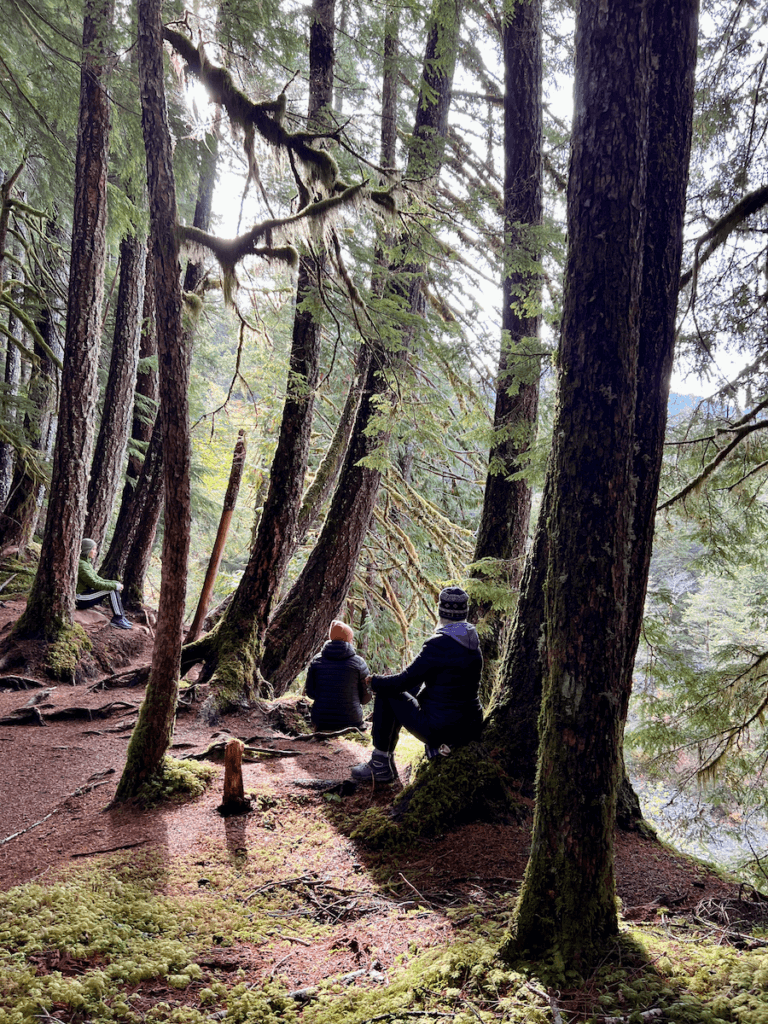
This might look like someone using a smartphone while walking on a forest path. Or a person hiking in a city park with a Bose speaker blasting music. Some who feel too vulnerable and alone in the outdoors, might not even venture into nature.
The fear of stillness leads to a need to find or accept distractions in nature. For example, walking a pet can have many outcomes for a natural connection. The pet owner can focus on every stick the dog runs toward or be mindful of the stick and take action without allowing it to monopolize the walk in the park.
If you want to create media, wait thirty minutes so you can bond with the environment first. If being alone in a forest is too much, go with a friend and agree to walk in silence. Or ease in at a city park with a forested section — Seattle’s Washington Park Arboretum lets you throttle seclusion up or down.
2. Fear of brain inaction
Also known as “monkey brain” or the need for the brain to constantly have a job to do. This is a close cousin to #1 — for people who claim they cannot shut down their brain. I’ve had my challenges with this, too.
Obsessing over something as small as the gallon of milk you need after the hike can derail a deeper connection to Nature’s intelligence. From constant daily stimulation, your brain craves action. It wants a job to do.
The answer is mindfulness — much easier said than done. Here are four things that work with clients:
2. Imagine the monkey brain item (like the gallon of milk example) as a tightly wound spring in your brain. Then, allow the spring to slowly unravel until there is no resistance and it just sits there.
3. Let the gallon of milk float through your brain like a cloud in the sky. Acknowledge it as a cloud and gently move it along the sky until it’s out of the picture.
4. When you start out in your nature experience, make an organic friend. Perhaps a tree with specially decorated bark or a bright new flower. Spend a few minutes with this item and create an impression in your mind. When you encounter fear of mental inaction, go back to this friend and allow the impression to fill your brain.
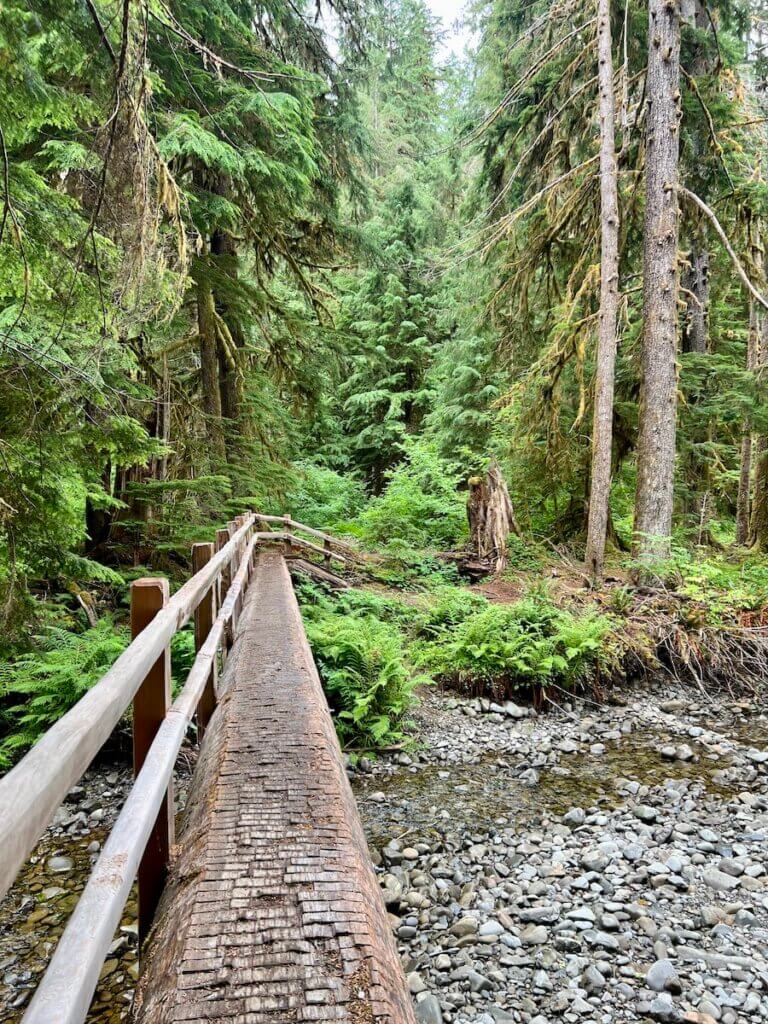
3. Fear of not knowing
This includes fear of not seeing or doing it all. Or fear of missing out. Or checklists and fitness goals.
This might look like someone rushing to see the waterfall because they want to go for the three-mile hike and then explore another corner of the park, all by 5pm so they can drive to another place to look at a renowned elm tree.
It can also resemble insisting on getting out a smartphone and looking up the type of tree because you need to know this now. If you’re trying to deepen a connection, why must you know what kind of tree? How does that help you form a tighter bond with the tree?
Curiosity and fitness goals have their place. But the need to know is one of the biggest distractions from forming a deeper Nature Connection.
Avoid interactive trails with placards because those may seduce you into feeling like you need to read the information to avoid missing out on something. Or, go to a place you’ve already explored and know the trails.
4. Fear of the present
Time travel to the past:
- “This lake looks like that one at xxx National Park last summer.” or “I remember finishing that mountain climb back in 2015; it wasn’t that great.”
Time travel to the future:
- I was on a trip once with a group of good friends. We were sitting on the porch of a rustic cabin overlooking an idyllic lake. And then, the conversation shifted to, “Where should we go next? What about next summer?” The phones came out, and distraction from any semblance of a deeper nature connection took hold.
Time travel to a different circumstance:
- “Someday I’ll be happy,”
- “When I win the lottery, I will buy a house on a lake like this.”
- “This summer, when I have more time… I want to…”
5. Fear of not being good enough
Also, the desire for external affirmation, the need for perfection, or wanting to look good.
In the modern day, social media drives a lot of this fear. We’re constantly marketed that we can’t achieve happiness unless we’re at a lake that looks idyllic, like [______]. Or the perfect beach. Or the need to have our friends and family see us in a particular light.
When the filter for beauty gets narrowed to a definition set by the external world, you miss countless openings for connection.
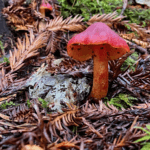
Look only at the “perfect” rose blossom and you’ll miss the slightly faded neighbor — who has something to show you about the beauty of aging.
Chasing a pre-determined view of perfection is a massive distraction from Nature’s actual perfection. Which is perfect imperfection.
6. Fear of the self
Also, fear of examining your shadow: perceived weakness, failures, and challenges in daily life. It can conversely be fear of examining perceived success — usually for fear it will all be taken away if you’re too confident or ungrateful.
The journey to the liminal space in the natural world — where a powerful intelligence can transform you — requires seeing yourself clearly enough to be open to helpful guidance and information.
This is very fertile but incredibly tender work.
Fear of the self can rear its head as any distractions already on this list. Because they all block the ability to exist in your true nature. In addition, it might appear as a fierce desire to keep the internal conversation casual and non-confrontational. Or, conversely, as a punitive drive of self-doubt. Avoiding self-clarity is the most dangerous distraction at either end of the spectrum.
What to do with all of this
Engage the Natural World for help.
That remedy may seem simplistic next to the volumes of self-help books, gurus, and podcasts designed to hand you the answer. But transformation only comes from venturing into the wilderness of your own life. And a regular Nature Connection practice is accessible, safe, and reliable.
You don’t need better gear or a bigger trip. You need to notice what pulls you out — and have something to do about it when it happens.
That’s the whole work.
Start with the book
The Wild Cure is the full framework: six Kinship Questions™ that turn time outside into a relationship with the Natural World, rather than another activity you complete.
It’s where the fears in this article get handled in daily life — not just on the trail, but on Monday morning.
If you’d like to talk it through
If you recognized yourself in more than one of these — and you’re ready to stop cycling back to the same place after every trip outside — book a Nature Alignment Call.
Forty-five minutes. No pitch deck. We talk about where you’re stuck, and whether The Wild Cure Private Mentorship is the right next step.
Book a Nature Alignment Call →
Or walk with me
Local to Seattle? A private Forest Bathing walk is the fastest way to feel the difference — most of these six fears surface within the first twenty minutes, and we work with them right there on the trail.