



Why forced gratitude keeps you stuck — and what helps instead
Gratitude journal not working? Forced gratitude can keep old pain in place. There’s another path back to real gratitude, through your own wild Nature.
This morning I got up at 5:30 am and prepared for a call with a woman in the UK. She’d read The Wild Cure and then booked a free Nature Alignment Call with me. This is where many of my clients come from. They get to know me through my work and then meet me “in person” via Zoom, from anywhere in the world.
She’s a counselor who helps domestic violence survivors. As she shared about her life and what drew her to the book, one moment stood out. She said, “So many therapy routes today insist upon doing a ‘gratitude journal,’ and it seems crazy to me to expect people who’ve been through such hell to be thankful for the scraps they’ve been thrown of the good.”
Now, I wouldn’t put it this way. But she reminded me that my own work doesn’t push people toward being grateful. I was raised to appreciate everything I had, especially relative to the vast sea of pain and suffering in the world. Children were always starving in a far-away place and I should be happy to eat the Brussels sprouts on my plate.
Well. Yes. That was likely very true.

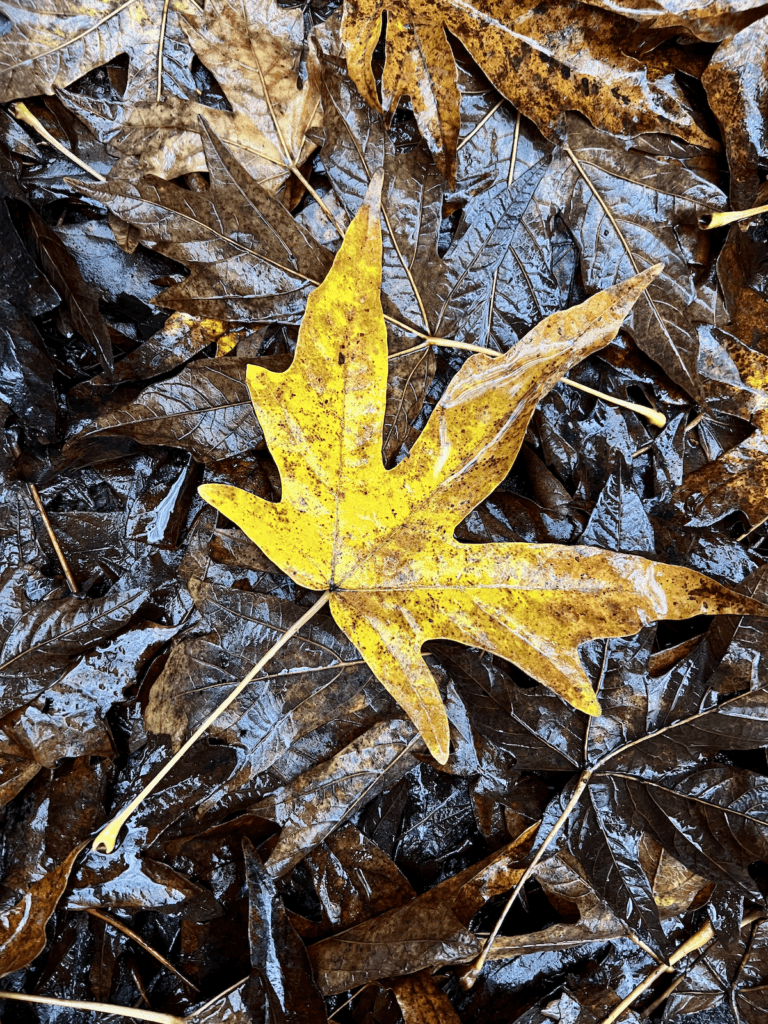
What the gratitude journal doesn’t reach
There are many bodies of work that report gratitude helps people move away from depression and trauma. There are even physiological shifts in the body when people hold appreciation and thanks for loved ones.
This is not to take away from gratitude. But gratitude forced on someone can slip into the shadow side. Some words for this might even be gaslighting. For a domestic violence survivor, is it helpful to be thankful for the roof over her head, in the same home as the offender?
Which is why I prefer to offer an alternative. If forcing gratitude isn’t the right path for you, in the darkest moments or even the lighter ones, remind yourself of a belonging deeper and more powerful than the current state of the world. The Natural World doesn’t demand that you be thankful for the scraps of love you receive from your family or the food you get to eat each day. The Natural World reminds you that you can belong, be authentic, and realize your true purpose.
She also reminded me that her purpose is to be alive. As you are.
When you’ve learned to say it wasn’t that bad
My mentorship clients usually come to me with a sense of knowing about their lives. Many have already done the work to assess their childhood and understand how the challenges shaped their life arc. But as we get talking, usually within the first session, the first roadblock is their fear of saying anything was “really that bad.”
Everyone seems programmed to say, “My parents didn’t have a lot, but they did the best they could, and I had what I needed. There were other people worse off than me.”
It is the ghost of “shut up and be thankful for what you have!”
And I know, because I spent a lifetime living with the ghost of good-enough past. I had abundant privilege in terms of food, shelter, education, gender, race, ancestry, economic promise, and grooming to act and speak in a way that connected to the dominant system.
So my ghost of good-enough past constantly whispered into my ear, “You didn’t have it that bad. Be grateful and just comply with the story your family, and the rest of the world, wants you to parrot.”
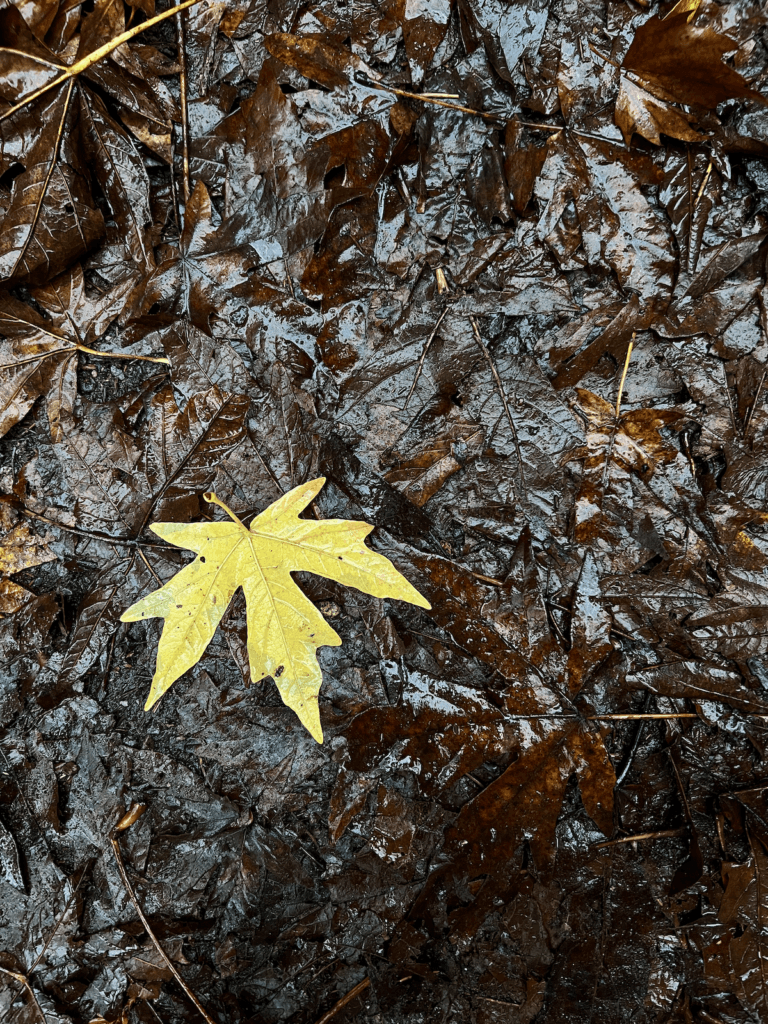

The ghost of good-enough past
Any time I thought about challenging the family dynamic, the ghost would whirl in and douse me with fear. Fear of being seen as an ingrate by my parents and family. Fear that by not being thankful, something bad would happen. Fear that I’d just be disappointed again by raising my hand to bring up something lurking in the family room. Fear that everyone else would pile on the guilt, call me selfish, and tell me it wasn’t that bad. Gaslighting my pain even further.
I meet people every day with the same ghosts. I can recognize them from a mile away. The ghost of good-enough past prefers a purgatory of sorts, where it is comfortable enough to keep the story of “good enough” alive. You can function in a society that prefers “good enough” to real alignment and connection, as long as you go along and never reach beyond it. Real alignment asks for more than that.
The myth of gratitude journals is that they allow you to heal and transcend pain and suffering. And yes, authentic gratitude is medicine for the soul, transforming mind, heart, and spirit. But forced gratitude, sometimes called toxic gratitude, is the shadow side that pulls you deeper into despair with your ghost. A good-enough-ing of the soul.
And your soul should never settle for good enough.
Small reminders, once a week.
If this is landing, my Substack is where I share reflections, photo journeys, and short stories from the Natural World — gentle invitations to slow down and notice more deeply. No commitment, no pitch. Just a weekly nudge back toward something you already know.
When everyone else seems so grateful
But please, don’t get the wrong message. My caller may still be in the early hours of understanding how to integrate authentic gratitude into her own wild Nature. And maybe you, too. I will not feed the fire of sarcasm and cynicism, because I used to live there, with my ghost, before and even during my journey back into the forest.
If your current situation is challenging, and you’re not seeing the beauty the way you want to, or the way you used to, there is an alternative to forcing gratitude. Especially if you look around and everyone seems to have this abundant gratitude, and everything is coming up roses. I used to hate those people. I used to roll my eyes and call it BS. There’s no way they can be that happy. To hell with gratitude.
And you cannot truly live with gratitude if you can’t truly live with your own wild Nature. Because, like everything in the Natural World, there are sides, opposites, light and dark, textures. Nothing is one-dimensional.
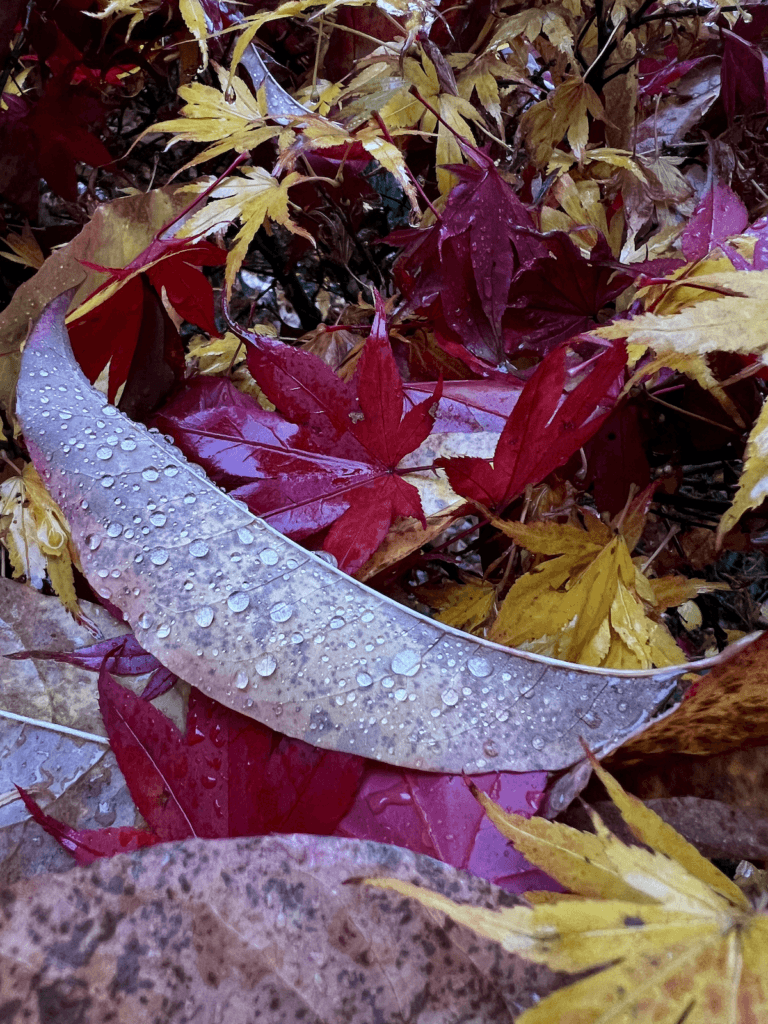
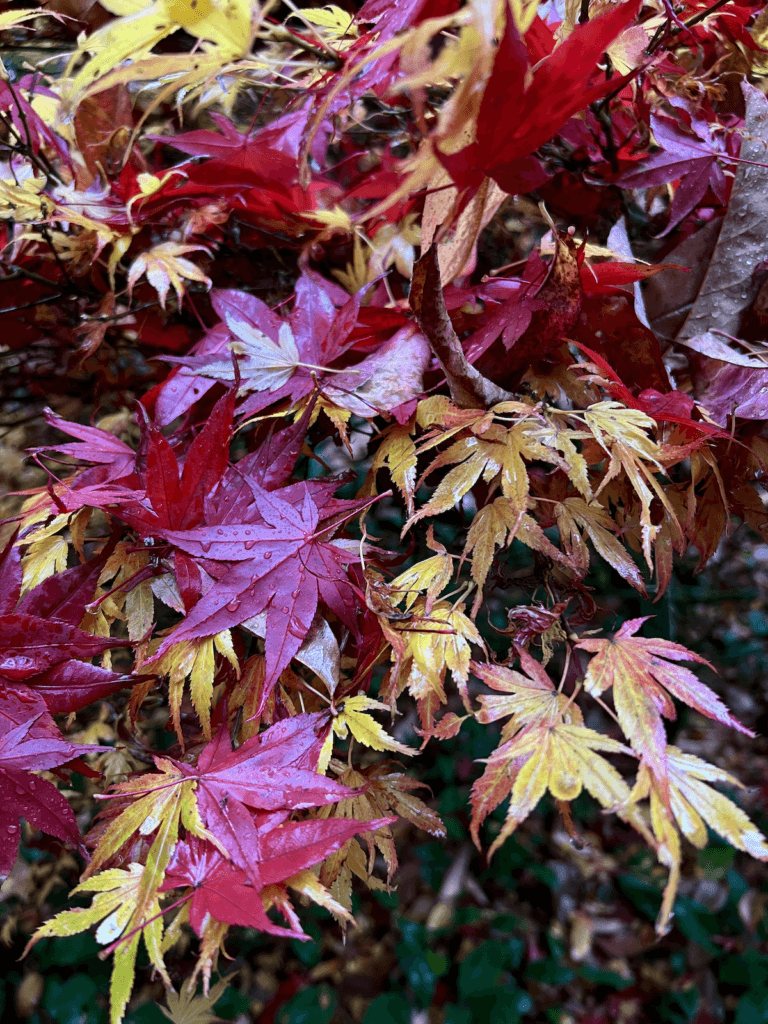
What helped me stop forcing it
What helped me see this was spending time in the Natural World. Taking my pain to the trees, and flowers, and grass, and birds. In those moments, I didn’t have to contrive gratitude. I just felt belonging. I didn’t have to intellectualize how thankful I was. I just was. I was alive.
This is the value of deepening your relationship with the Natural World, and therefore with your own wild Nature. Gratitude helps you out of a difficult place because you live it rather than think about it. It integrates your heart and gut, and it feeds the mind with calm and peace.
I couldn’t face my childhood in full until I separated myself from the good-enough gratitude cycle. And I separated myself from the cycle by deepening my relationship with the Natural World, so I could start to take my pain there to process.
When I reached clarity in my heart, I knew it was safe to bring forward the deep, dark secrets of anger, disappointment, fear, sorrow, guilt, and worry, to name a few of the whispers lurking beneath the surface of my good-enough cycle.
There is a lot of talk today about clarity, among much of the other self-help jargon. The same place where gratitude journals live. But another way to talk about clarity is through truth-telling. The way through is seeing the whole scene, not just the one polished for the outside world. Clarity in the heart brings the courage to see the shadow.
I wrote a book about this.
The Wild Cure: The Forgotten Medicine to Restore Calm, Clarity, and Connection is the long-form version of everything on this page — the disconnection, the framework, and the way back. It’s built to be used, not just read.
Standing at the river’s edge
It felt raw and downright impossible to grasp the truth: as a young boy, I carried things no young boy should have to carry. Every time I tried to go there, my gratitude ghost would blow in, distracting me with good-enough lullabies to keep me safe in the world of “I had a privileged childhood.”
And my ghost had good in mind for me. I was in my 40s when I finally sat with that truth, and it rocked every aspect of my identity. My identity was Matthew Kessi, from that great family in Scappoose. The guy who seems to have everything. He surely had a great childhood.
This felt like a tug-of-war within me. Be thankful. What’s the big deal? Every family has its rough patches. Other kids had it far worse. No, I should just be thankful for what I had and leave it alone.
But at the core of this tug-of-war was fear. Fear of seeing the truth. Because I couldn’t yet see that after the first step, seeing the truth, comes integrating the truth into my Nature. On the path, it’s like an unknown river to ford up ahead. Staying on this side of the bank feels more comfortable, even though the bear is coming to the river to hunt for salmon. For me, the bear was the cost of staying put. A demise set up by the false promise that good enough would ever be truly enough.
I knew the bear was coming for me. I saw the river and knew it wasn’t too deep to cross. When I hiked my pants up to my knees and stepped in, the water felt too cold, too fast. For years. “What if I drop my shoes and they get wet?” “What if I lose my balance and fall into the water?”
For so long, it was actually more comfortable to wait for the bear to come get me. To wait at the river’s edge for my demise. To surrender.
In those moments of paralyzed fear, I remembered my friends, the spirits of the land. They beckoned me to release my good-enough ghost. They encouraged me to find a different place to cross the river.
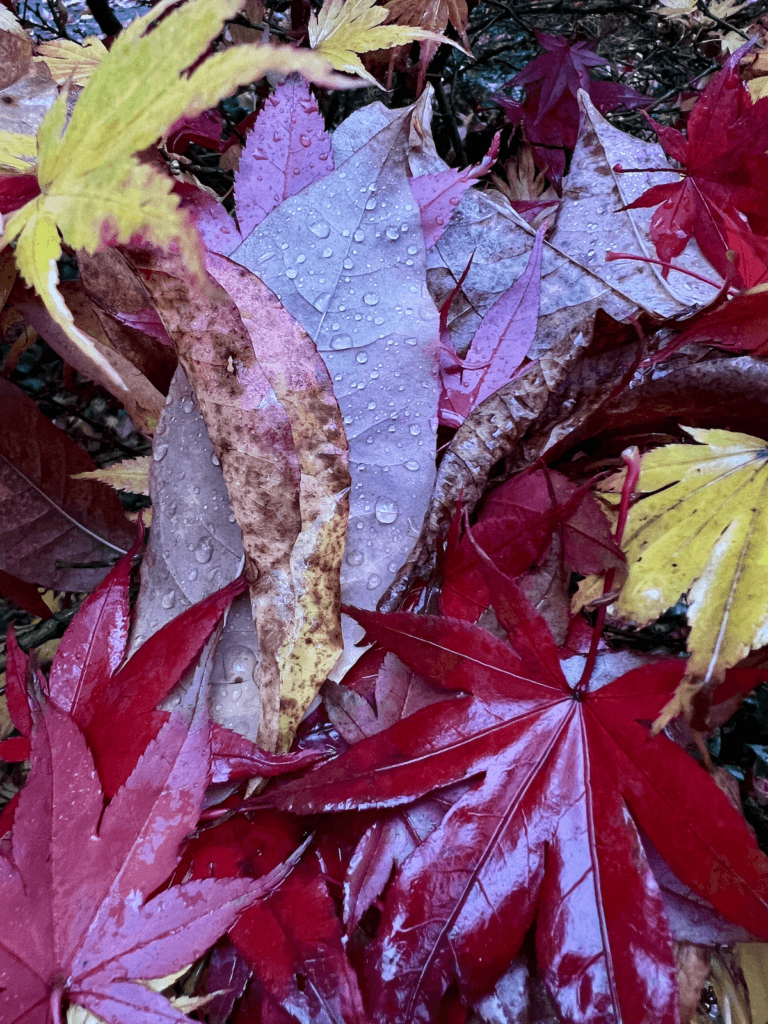
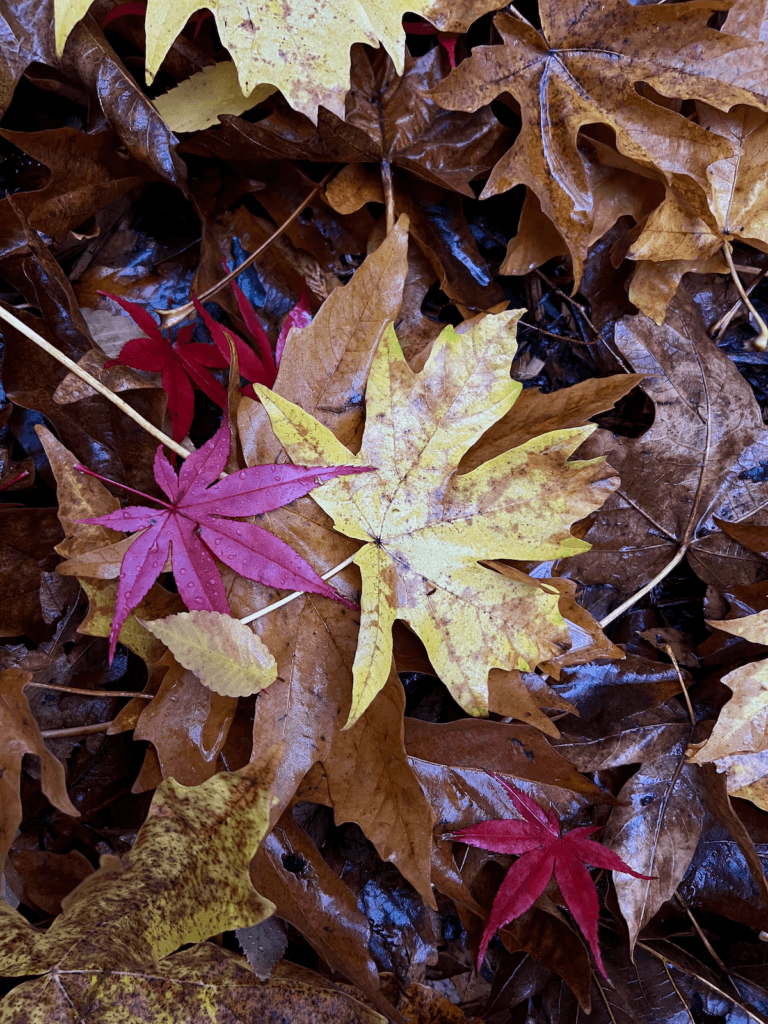
So how do you cross the river?
Just like me at the river’s edge, sensing the bear but not feeling comfortable crossing, finding calm is an important step before you assess anything. In my case, I called on a lifetime of relationships with the land spirits who’ve protected and guided me for as long as I can remember. But even if you don’t feel this depth, you can start by asking Nature’s Intelligence for help. One way in is through the six Kinship Questions.
You can bring this forward anywhere, and at any time, because it lives within you. Beautiful Nature scenes can help, but watch for the trap of conditions. If you hear yourself saying, “I need trees in order to…” that’s a condition trap. People push back on this all the time. You already have the medicine. You can learn to plug into Nature’s wisdom with a houseplant. It helps to notice where you have conditions that keep you from Nature’s help. Conditions are a figment of the mind, and they’ll limit your ability to cross the river.
You might start with something like the shallow offshoot I found. Something in your life where you feel like, or you’ve been told, you should be grateful, but you aren’t. A place where the outside world may have pushed a narrative onto you that feels like gaslighting or unwanted pressure. Something like, “You should just be thankful you have a job.” Or, “You should just be thankful to have a partner.”
Then you can walk it through the six questions.
Opt into Nature’s Intelligence. How can you say yes to working with the energy of this forced gratitude?
Cultivate your intention to bring your whole self. What are all the sides to this energy? How do you really feel about your job? What are the authentically good things, if any? What grates on you? Where do you give your authenticity away for acceptance? Perhaps you imagine your job as a sphere, with a light side and a shaded side. You can imprint all these feelings onto the sphere and hand it to the Natural World. Perhaps you give it to your beloved houseplant, or the tree outside your bedroom window. Then imagine Nature tosses the ball back to you, to take another look. You adjust the imprinting as needed and toss it back. No judgment, blame or agenda to fix anything. Just a flowing conversation, like the river’s water.
Remain present. How can you be present to this sphere, and just this sphere? You might reach what some call a brick wall. But in conversation with Nature there is always movement, so the wall tells you there’s an opportunity to be more present to your own wild Nature. Fear is a likely culprit, and it will for sure try to enter the conversation. This is normal. You descend from the humans best equipped to move through fear rather than succumb to it.
Find your natural pace. Where is the speed of this issue out of step with your internal rhythm? Like a slowly moving eddy at the side of the river, a different pace may help you cross. This may look like slowing down the movie in your mind about your job’s ups and downs. What is the right pace for your Nature to move from “good enough” to aligned?
Notice. Does the charge diminish? Are you clearer about your situation? Is there a path you didn’t see before? Does anything surprise you? If it’s still murky, that’s okay. That’s still information.
Reflect and integrate. What’s one thing you can take with you from your wild Nature? How can you hold the sphere in a more empowering way, just for today? What’s a landmark that will remind you to return to this conversation with your Nature?
Through this exercise, you may naturally arrive at feelings aligned with gratitude. But you are no longer forcing it. You’re engaging a truth-telling conversation that lets you acknowledge all the parts of your inner garden. And by including all of them, you open up movement and a new sense of calm, clarity, and connection.
When gratitude is something you live
When you’re connected to your own wild Nature, and to the land’s intelligence, you’re living gratitude in your integrated mind, heart, and spirit. In that place, a gratitude journal no longer matters. It no longer has charge. And a spiritual “good enough” no longer holds you.
You don’t have to consider being grateful, because you’re living it. You are it. You are your own Nature.
Or start with a conversation
If the ghost of a good-enough past sounds familiar, and you’ve done the work but the old story still holds you, this is the river we cross together in The Wild Cure Nature Mentorship. It starts with a free conversation.